
How Foreclosure Cleanouts Help Knoxville Real Estate Investors Move Properties Faster
Quick Answer: A foreclosure that just closed is not the same thing as a foreclosure that is ready to work. Banks and asset managers selling a property as-is almost never remove what a previous owner left behind, so the furniture, appliances, garage contents, and yard debris become the buyer's problem the moment title transfers. For a Knoxville investor running a rehab on a schedule, that leftover volume is the first obstacle standing between closing day and a contractor's first swing of a hammer. A professional cleanout crew that handles the property in one organized visit, rather than a series of weekend trips to the transfer station, typically clears a single-family home in one to five days depending on how much was left and how the property is laid out. Booking that cleanout as the very first task after closing, instead of squeezing it in around a renovation crew's schedule, is what keeps a flip or a rental conversion moving instead of sitting idle waiting for someone to make room to work.
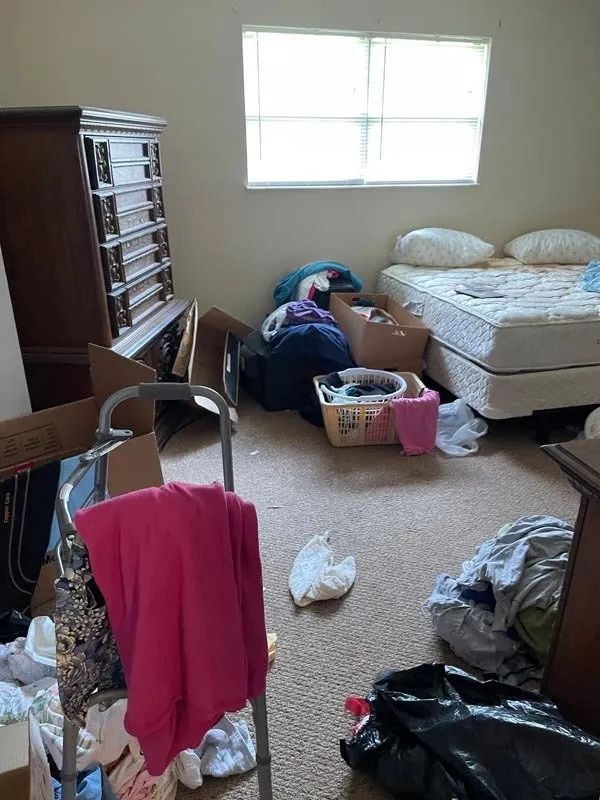
Picture the version of this most investors know well. The auction paperwork clears, or the REO listing finally gets accepted, and the keys are yours. You have already lined up a framer, already penciled in an HVAC assessment, already told your lender you would have the property draw-ready inside a couple of weeks. Then you walk the house for the first time as the owner instead of the buyer, and the plan runs into a wall. There is a bedroom set nobody moved, a kitchen table still set with dishes, a garage that looks less like storage and more like the last twenty years of somebody's life compressed into a single space. None of it belongs to you. All of it has to leave before anyone can start the work you actually bought the property to do.
That gap between the closing table and the first day a trade crew can genuinely get to work is where a lot of Knoxville rehab timelines quietly fall apart. It rarely shows up on a project schedule as its own line item, because it looks like something an investor should be able to handle personally, over a weekend, with a rented trailer. On paper that plan works. In practice, it is one of the most common places a fixed renovation calendar starts sliding before the actual renovation has even begun.
Why Every Idle Day Works Against the Investor, Not the Property
The property does not care how long it sits full of somebody else's belongings. The investor does. Every day a house stays cluttered instead of cleared is a day a permit application waits, a day a trade crew's slot on their own calendar goes unused, and a day closer to a resale window that started counting the moment title changed hands, not the moment the renovation actually kicked off.
That distinction matters more than it seems to at first. Investors tend to plan a rehab timeline around the work itself: framing, mechanical, drywall, paint, flooring, final punch list. What rarely gets its own line on the schedule is the step that has to happen before any of that work can start, which is simply making the house empty enough to work in. A framing crew cannot open a wall that has furniture stacked against it. An HVAC technician cannot properly inspect a unit buried behind boxes in a utility closet. A flooring estimator cannot get an accurate read on subfloor condition through a room full of somebody else's belongings.
Skipping past that step, or treating it as something to knock out personally between other tasks, is how a two-week renovation window quietly becomes a four-week window. The delay rarely announces itself as a cleanout problem. It shows up later as a missed contractor start date, a permit inspection that gets rescheduled, or a lender draw request that stalls because the inspector could not properly document the property's condition.
The Real Reason Banks Leave Everything Behind
First-time foreclosure buyers are often surprised by how much gets left in a property, but the pattern is consistent enough to plan around once you understand why it happens. Foreclosed homes are typically vacated under financial pressure, and the departing occupant's priority in that moment is rarely a clean handoff. Banks and asset managers selling the property afterward are focused on closing the sale, not on clearing closets, so the as-is condition on an REO listing genuinely means as-is, contents included.
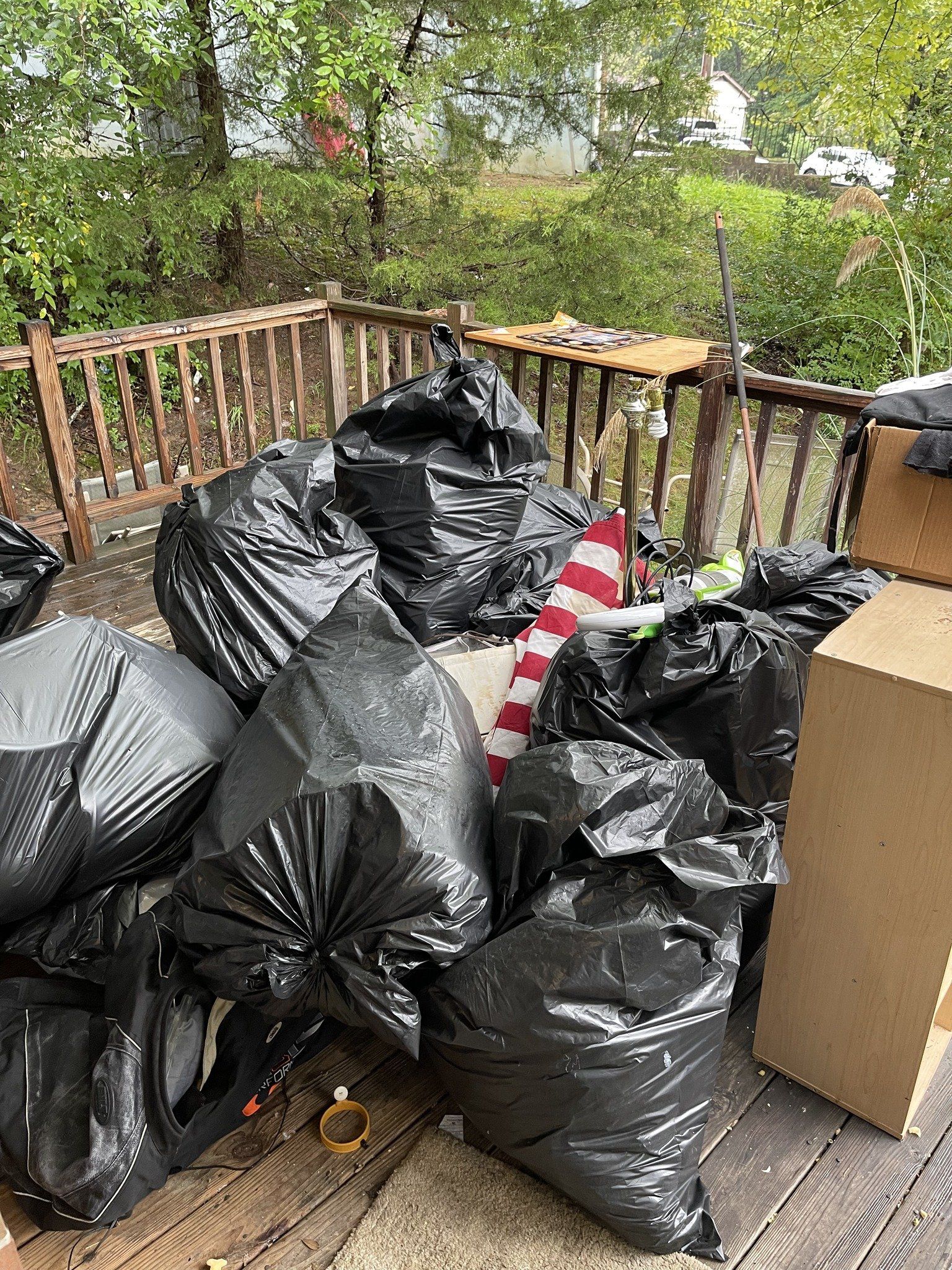
That leaves an investor inheriting whatever the previous occupant could not or did not take. Furniture is the most visible category, showing up in living rooms, bedrooms, and dining areas. Kitchens are frequently left with dishware, small appliances, and pantry items still in place. Garages tend to hold tools, stored boxes, and household overflow that accumulated for years before the property ever went into default. Yards can carry their own leftover layer, from old fencing and yard equipment to storm debris that built up during a stretch of vacancy nobody was maintaining.
Basements and attics are where the volume most often catches investors off guard. They are the spaces a quick pre-purchase walkthrough tends to skip, and they are frequently where the largest concentration of leftover belongings ends up: old furniture, boxed decorations, building materials, sometimes an appliance or two that never made it out the door. An investor who scopes cleanout time based on what they saw from the main living areas alone is usually underestimating the job by a meaningful margin once the basement and attic actually get opened up.
Not everything left behind belongs in a dumpster, either. Paperwork, family photographs, and small personal items occasionally turn up even in properties that have clearly sat vacant for a while, and a crew that sets those aside instead of hauling them straight to a landfill run is handling the job the right way, even if it adds a few extra minutes to the sort.
Volume and Access: The Two Variables That Decide How Fast a Property Clears
Two factors do almost all the work in determining how long a given cleanout takes, and neither one is the square footage listed on the property record. The first is volume, meaning how much was actually left behind. A lightly furnished starter home clears fast. A property with a packed garage, a full basement, and an attic nobody touched in a decade takes longer, regardless of how small the house looks from the street.
The second factor is access, and it tends to surprise investors more than volume does. A property where a truck can pull directly up to the door and crews can move in a straight line clears noticeably faster than one where every load has to go around a fence line, down a narrow set of exterior stairs, or through hallways still blocked by furniture. Hillside lots and older Knoxville neighborhoods with tighter driveways and detached garages, the kind of layout you will find scattered through parts of Fountain City, Bearden, and South Knoxville alongside newer construction out toward Farragut and Hardin Valley, can add real time to a job that looked simple on paper.
Tip: Walk the property with your cleanout crew before you set a renovation start date with anyone else. A quick estimate based on curb appeal or square footage alone is one of the easiest ways to build a rehab schedule around a number that does not hold up once the garage door goes up and the basement gets opened.
Getting a realistic read on both variables up front, rather than guessing from a drive-by, is what lets an investor build a schedule around an actual clearance date instead of a hopeful one.
Where the Contents Actually Go: Salvage, Donation, and Recycling
What comes out of a foreclosure property does not all head to the same destination, and for an investor watching margin, that sorting is worth understanding. Metal appliances, fixtures, wiring, and scrap building materials generally have a recycling path rather than a landfill destination. Furniture and household goods still in usable condition can often go to donation instead of disposal, which keeps functional items out of the waste stream and, on properties with a genuine volume of usable furniture, can meaningfully reduce what ends up in a dumpster in the first place.
Construction and demolition debris is its own category and typically needs a facility built to accept it rather than a standard trash pickup, which matters once the personal belongings are cleared and the actual renovation debris starts generating, torn-out flooring, old drywall, damaged cabinetry. A crew that sorts materials as items leave the property, rather than combining everything into one undifferentiated load, saves that separation step from becoming a second job later and keeps each material category moving toward the right place the first time.
For an investor working properties across Knoxville, Maryville, Oak Ridge, Sevierville, Alcoa, and the surrounding East Tennessee service area, a crew that already knows the local recycling and donation landscape handles that logistics work automatically, instead of leaving it for the investor to research between job sites.
The Scheduling Mistake That Sets a Rehab Back Further Than the Cleanout Itself
The single most common sequencing error on a foreclosure rehab is booking the renovation crew before the cleanout date is actually locked in. It is an easy mistake to make, because a framing crew or an HVAC technician often has the longest lead time to schedule, so investors book them first out of habit and assume the cleanout will simply happen in time.
Warning: A skilled trade crew that shows up to a property still full of a previous owner's belongings cannot start the work they were booked for. In a market where good contractors are frequently already scheduled weeks out, rebooking a crew around a property that was not ready when promised often adds more time back onto the calendar than the cleanout itself would have taken in the first place.
The fix is simple in principle even though it is easy to skip under time pressure: treat the cleanout as the first scheduled task on the rehab calendar, confirmed and dated before any renovation trade gets a firm start date. A cleanout that finishes on time protects every trade scheduled after it. One that gets treated as an afterthought pushes the entire downstream schedule back with it, and that slippage tends to compound rather than stay contained to a single week.
Running a Multi-Property Pipeline Through Knoxville and East Tennessee
Investors working a single flip can absorb a few lost days without much consequence. Investors running several properties through a rehab pipeline at once cannot, because a delay on one property has a way of pulling attention and crew availability away from the next one in line. A cleanout that finishes on a predictable, consistent timeline is what lets an investor actually plan a pipeline instead of reacting to whichever property happens to be causing problems that week.
Consistency matters here as much as speed. An investor who knows a typical Knoxville property clears in a defined window, and who can count on that window holding regardless of whether the property is in a tight urban lot near downtown or a larger parcel out toward Loudon or Clinton, can stack acquisitions with confidence instead of building in padding for a step that should not be the unpredictable part of the process. That predictability is what turns a foreclosure cleanout from a logistics headache into a scheduling input an investor can actually plan around, property after property.
Frequently Asked Questions
How long does a foreclosure cleanout typically take before renovation can start?
Most single-family Knoxville properties clear in one to five days. Volume and access drive the range. A lightly furnished home can finish in one day, while a packed garage, basement, and attic push toward five.
Why doesn't the bank clear the property before selling it?
Banks selling REO properties focus on completing the sale, not emptying the home. Responsibility for the contents transfers to the buyer at closing, so an as-is purchase includes whatever the previous occupant left behind.
What gets left behind most often in a foreclosed property?
Furniture, kitchen items, garage tools, stored belongings, and yard debris are the most common. Basements and attics are the areas investors underestimate most, since a quick walkthrough rarely reveals how much material they hold.
Should the cleanout happen before or alongside the renovation crew?
Before. Renovation crews need open floor space and clear access to work efficiently. A property still full of belongings slows every trade, so scheduling the cleanout first keeps the rest of the renovation calendar from sliding.
Does a cleanout crew separate recyclable materials and donations from regular trash?
Yes. Metal appliances, fixtures, and scrap materials typically go to recycling, while usable furniture and household goods often go to donation. Sorting happens as items leave the property, so each category reaches the right destination.
Getting From Closing Day to a Ready Property
A foreclosure closing feels like the moment a rehab begins, but the real clock starts when the property is empty enough for a crew to work in it. Everything left behind, from furniture and kitchen items to garage contents and yard debris, has to leave before framing or flooring work can move forward. Investors who treat that step as the first task on the calendar, rather than a weekend errand, protect every trade scheduled after it and keep timelines steady.
Just Call Scott
has spent 20
years handling foreclosure cleanouts across Knoxville, TN, and the pattern is consistent. Properties that get cleared in one organized visit hand contractors open space, clear access, and an accurate view of what needs work. Sorting scrap metal, appliances, and usable furniture as items leave keeps materials moving to the right place without creating a second job later. When the first step is handled well, everything after it runs closer to plan from day one.