
House Cleanouts in Knoxville: Reclaiming and Revitalizing Your Living Space
Quick Answer: A house cleanout gives Knoxville homeowners back the rooms they've stopped using, not by throwing everything out, but by working through the home with a clear keep-donate-haul system that separates what still has value from what doesn't. Surveys from the National Association of Productivity and Organizing Professionals find that more than half of Americans feel overwhelmed by the amount of stuff in their homes, and a full house is rarely one big problem so much as years of small "for now" decisions stacking up in every room. The fastest local route for keepable items is Knox Area Rescue Ministries, which runs free donation pickup across Knoxville, while the City of Knoxville's curbside bulky waste program handles up to five large items a week and the county's Household Hazardous Waste facility takes what a standard cleanout can't. What comes back once a home is cleared isn't just floor space. It's a guest room you can actually put someone in, a kitchen table you can eat at, and a house that stops quietly working against the people living in it.
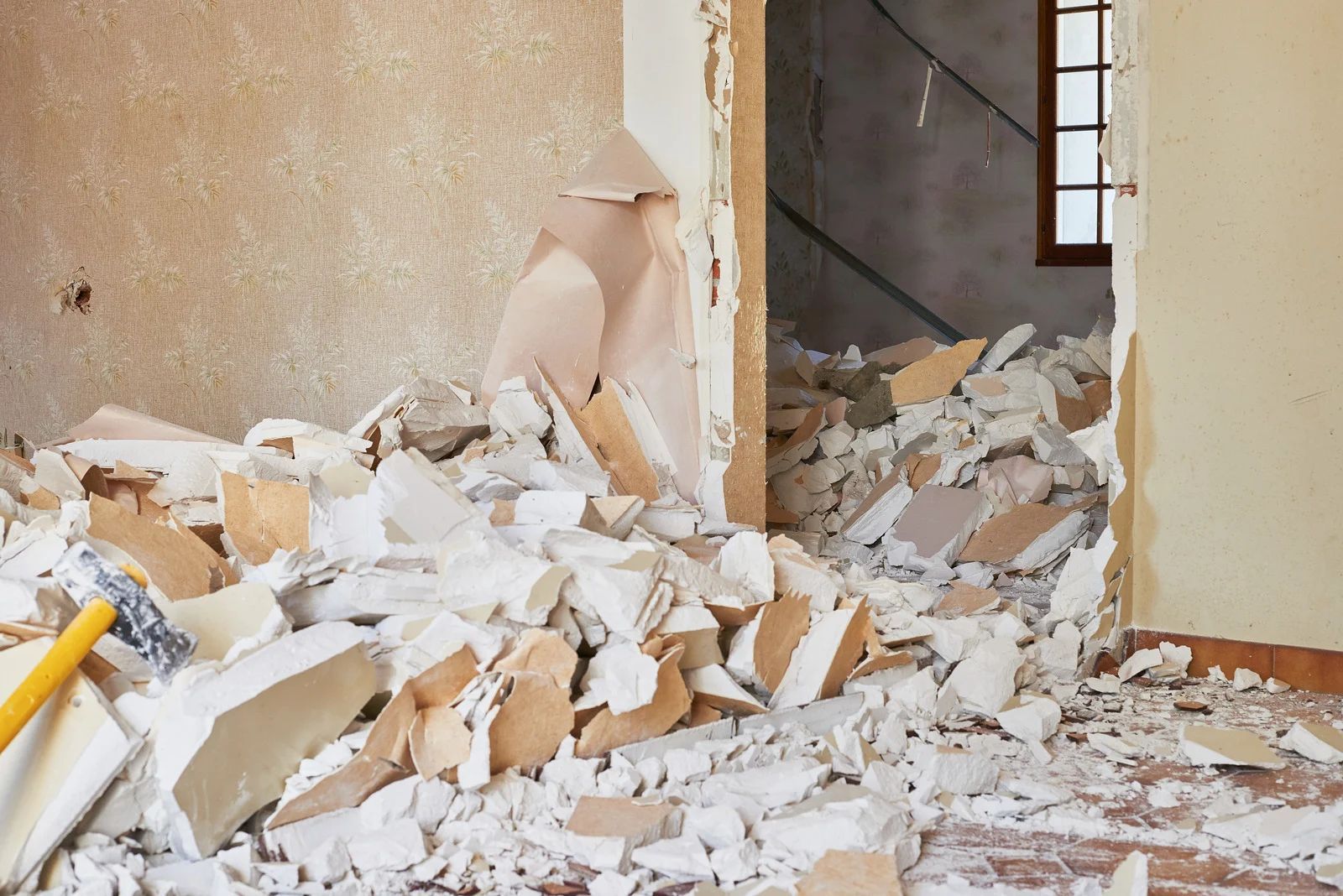
The recliner in the den has not been sat in for two years. It's not broken, it's just buried, under a stack of mail, a laundry basket that never made the trip upstairs, and a box of holiday decorations someone set down "for now" back in December. Down the hall, the guest room holds an old treadmill, three sealed boxes from the last move, and a twin bed you cannot currently reach without climbing over something. None of this happened on purpose. It happened one Saturday at a time, until a four-bedroom house started functioning like a two-bedroom one. Nobody noticed the day it crossed that line. There usually isn't one.
This is what a full house does. It doesn't announce itself as a problem. It just narrows, room by room, until you are living in a smaller version of the home you're paying for, and the parts of it you've lost track of start to feel less like storage and more like a slow drain on the rest of the place. Getting it back is not about a single heroic weekend. It's a specific, repeatable process, and knowing how it actually works, room by room, is what turns a project you've been avoiding for years into one you can finish this month.
Why a Full House Starts to Feel Like a Smaller One
Clutter gets treated as a cosmetic issue, something to deal with eventually. That undersells what's actually happening. A house you can't fully use changes how you function inside it, and the research on this is more specific than most people expect.
It's not just you. Decluttr's survey conducted with the National Association of Productivity and Organizing Professionals found that more than half of Americans feel overwhelmed by how much they own. That number matters because it reframes a full house from a personal failing into an ordinary, widespread situation, one that a huge share of homeowners are quietly dealing with at the same time.
Clutter competes for your attention, literally. Research out of the Princeton University Neuroscience Institute has found that visual clutter competes with the objects you're actually trying to focus on, adding to mental fatigue over the course of a day. A room stacked with unfinished piles isn't neutral background. It's actively pulling a small amount of attention away from whatever you're trying to do in it.
Dust and stagnant air add a physical layer.
Beyond the mental load, a home packed with clutter tends to trap dust and reduce airflow, which is part of why professional cleanout crews often note a noticeable improvement in a room's air quality once the excess is gone. For anyone in the house who deals with allergies, that's not a minor detail.
The Moments That Usually Push a Cleanout From "Someday" to "Now"
Full houses rarely get cleared on a random Tuesday. Almost every cleanout Knoxville homeowners schedule traces back to a specific moment that made the clutter impossible to keep ignoring.
A Kid Moves Out, Or A Parent Moves In
An empty nest turns a bedroom from "off-limits" to "finally usable," while a parent moving in does the opposite, forcing a room that's been storage for a decade to become livable again fast.
Working From Home Stopped Being Temporary
A home office that started as a laptop on the kitchen table eventually needs its own room, and that room is usually the one that's been catching everyone else's overflow for years.
A House Is Going On The Market
Buyers and their agents read a packed house as smaller and less cared-for than it is, and clearing it out is one of the more direct ways to change that impression before the first showing.
Family Is Coming To Stay
The holidays, a new grandchild, an extended visit, these are the deadlines that finally push a guest room or a finished basement from "we'll get to it" to "we have three weeks."
The House Has Simply Outgrown The Storage It Started With
No single event caused it. It's a decade of birthdays, hobbies picked up and dropped, and a growing family that slowly filled every closet, and one day the math just stops working.
What's Actually Filling the Rooms You've Stopped Using
Before you can clear a room, it helps to understand what's really sitting in it. It's rarely what people assume.
Most of it isn't in use. A survey of 2,000 Americans found that people estimated 34 percent of the items in their homes were non-functional, and 13 percent were flatly described as junk. That means in an average full room, roughly a third of what's there isn't doing anything for anyone, and it's still taking up the space that a working room needs.
Letting go is harder than it sounds because objects aren't just objects. Professional organizers describe a few forces that keep things around long after they're useful: they connect you to a memory or a version of yourself, and the brain tends to overweight the risk of regret over the relief of clearing space. None of that is a character flaw. It's a normal, human reason cleanouts stall, and naming it makes the actual sorting decisions faster.
Decision fatigue does the rest. Every "keep or let go" call draws on the same limited mental energy, and a full house means hundreds of those calls in a row. That's why cleanouts that try to sort the entire house in one pass tend to collapse by the second room, while ones broken into smaller sessions tend to actually finish.
A Way Through That Doesn't Require Doing It All at Once
The instinct is to picture the whole house at once. That's exactly what makes the project feel impossible. But a cleanout never actually works that way. It only ever happens one room, one zone, one decision at a time.
Pick the room with the clearest payoff first. Starting with the space that will change your daily life the most, the guest room before a visit, the office you're trying to actually work from, gives you a finish line worth reaching, and a finished room builds the momentum the rest of the house needs.
Sort into three piles and stop there. Keep, donate, and haul-away covers almost everything. A fourth "maybe" pile is how a cleared room quietly refills itself a few months later, so the rule that keeps things moving is simple: no maybes.
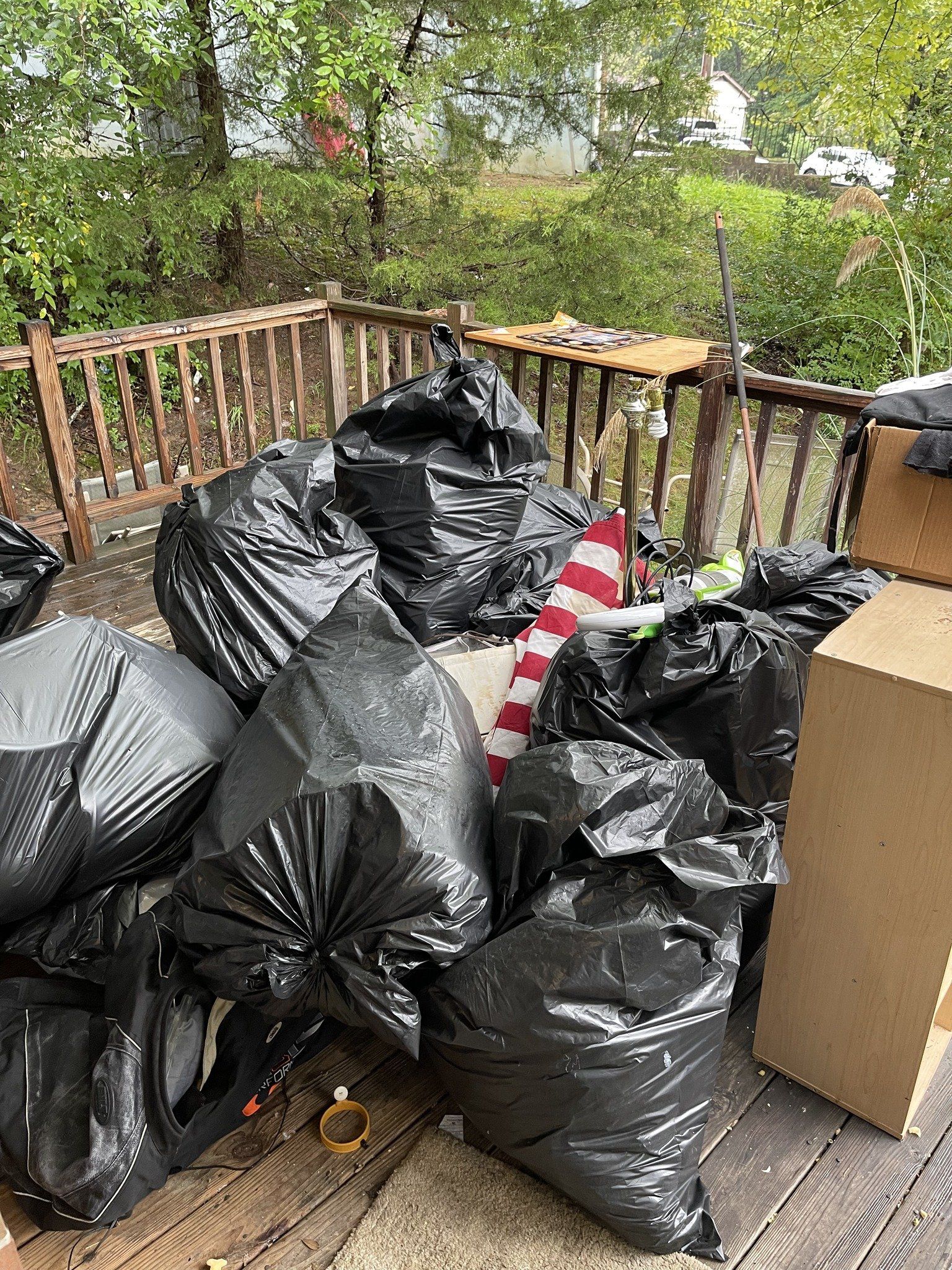
Separate the heavy decisions from the heavy lifting. Deciding what stays is yours to do. Carrying a dead treadmill down a flight of stairs, hauling a packed dresser out of an attic, loading a truck's worth of furniture, that's the part that stalls almost every do-it-yourself cleanout and the part a crew is built to take off your hands.
Tip: When an item stalls you, ask one question instead of a dozen: does this support the life you're actually living right now, not the one you had five years ago or the one you might have someday? A treadmill from a gym membership you canceled in 2022 fails that test fast. It's a faster filter than trying to weigh sentimental value, resale value, and "what if" all at once.
Where It Goes When It Leaves Your House
A fair worry with any cleanout is that everything just ends up in a landfill. Around Knoxville, there are several real, local paths that keep a large share of what leaves your home in circulation instead.
Knox Area Rescue Ministries takes furniture and household goods with free pickup. KARM Stores offers no-cost donation pickup across Knoxville and the surrounding area for large items you can't transport yourself, including furniture, appliances, electronics, and household goods, and every dollar the stores make funds KARM's programs for people experiencing homelessness in East Tennessee.
The City of Knoxville's curbside program handles bulky waste on a schedule. City residents can set out up to five bulky items, furniture, appliances, and similar large pieces, next to the trash cart by 7 a.m. on their regular service day, and the city's Solid Waste Facility on Elm Street offers free disposal for residents on the first Saturday of each month.
Hazardous materials go somewhere else entirely.
Old oil-based paint, stain, varnish, and paint thinner cannot go in the regular trash or curbside pile, but Knox County's Household Hazardous Waste facility on Elm Street accepts these items free of charge from residents throughout the county. That's where they belong. Not a storm drain, not the regular haul.
What Actually Changes Once the Rooms Are Yours Again
It's easy to frame a cleanout around loss, all the things being carried out the door. The more accurate frame is what's left behind, because on the other side of a full house is not an empty one. It's a usable one.
The most immediate change is that rooms go back to doing their job. The guest room can hold a guest. The office can hold a workday. The dining table clears enough to actually sit at. Beyond the obvious, homeowners tend to notice cleaning gets easier almost immediately, since fewer surfaces mean fewer places for dust to collect and less to move around every time you vacuum. And if a sale is anywhere on the horizon, a cleared, walkable home reads as larger and better maintained than the same square footage packed with two decades of accumulation.
The quieter shift is how the house feels to be in. A home that isn't fighting you for attention in every room is one you can actually rest in, and that's the return most people didn't realize they were missing until the piles were gone.
Frequently Asked Questions
How do I know if I need a full house cleanout or just a weekend of organizing?
A closet, garage corner, or one bad drawer usually needs just a weekend. A full cleanout makes sense when multiple rooms are unusable, a deadline looms, or the volume is too heavy to haul out alone.
What's the best order to clear rooms so I don't get overwhelmed?
Start with the room that will change daily life the most, the guest room, home office, or kitchen table, rather than the worst room. One finished space builds momentum for tackling harder rooms later on.
Where can I donate furniture and household goods in the Knoxville area?
Knox Area Rescue Ministries offers free donation pickup across Knoxville for furniture, appliances, electronics, and household items too large to transport, with proceeds from KARM Stores funding local homelessness programs. Drop-offs are also welcome directly.
Does the City of Knoxville pick up bulky items curbside?
Yes. City of Knoxville residents can set out up to five bulky items, furniture, appliances, and similar large pieces, next to the trash cart by seven a.m. on their normal collection day for curbside pickup.
How do I decide what to keep when an item has sentimental value?
Sentimental items are where cleanouts stall, because the pull isn't about the object, it's about the memory attached. Ask whether it supports the life you're living now, not a past one, and keep what matters.
Do I have to sort through everything myself before a cleanout crew comes?
No. The decisions about what stays and what goes are yours, but you don't need to pre-stage the house into piles first. A crew works room to room, so your job is flagging what stays.
Your Knoxville Home Is Still Worth Reclaiming
A full house never means the home underneath it is lost. It means years of ordinary choices, keeping something "for now," setting a box down "just until," quietly piling up faster than anyone got around to sorting through. The way back isn't complicated: one room at a time, three honest piles, and local places for donations and hazardous items to land instead of one indiscriminate load at the curb. And the rooms you're paying for but not living in finally come back.
Just Call Scott
has spent 20
years clearing homes across Knoxville, TN, and the same principle holds true every time: nothing gets hauled out until you've said it can go. What's left when the crew pulls away isn't an empty house, it's a usable one, a guest room ready for a guest, a kitchen table clear enough to sit at, and a home that finally feels like yours again instead of something you're quietly working around.