
7 Junk Removal Tips Every Knoxville Homeowner Should Know
Quick Answer: Junk removal goes best in Knoxville when you match each pile to the place that handles it. City bulky pickup takes furniture and some appliances that two sanitation workers can lift, after you call 311 first. The brush program runs every two weeks from March through October and wants a pile no bigger than six feet on each side. Paint, batteries, propane cylinders, and pesticides belong at the household hazardous waste facility on Elm Street. Refrigerators, gas powered equipment, and renovation debris need their own handling. Finish with a last pass for personal items, and let the weather set your date. A local crew picks up whatever the city programs do not.
It starts with one afternoon and one honest look at the driveway. There is a recliner that has been in the garage since spring, two cans of paint that you are not sure are still good, a pile of limbs from the last storm, and a dead refrigerator that has outlived three moves. You know it all has to go. What you do not know is where each thing is supposed to go, and whether the city will take it if you set it at the curb.
Homeowners across Knoxville, Maryville, Oak Ridge, Farragut, Lenoir City, Sevierville, Pigeon Forge, Alcoa, Loudon, and Clinton run into the same puzzle. The general advice you find online about junk removal is fine, but it rarely tells you how things work around here. The local rules for bulky pickup, the brush calendar, and the household hazardous waste facility decide what you can do yourself and what is better left to a crew.
These seven tips are built around how junk removal actually works in Knoxville and East Tennessee. Use them to sort your pile once, send each item to the right place, and avoid the second trip nobody wants to make.
1. Sort Your Pile by Where It Can Actually Go
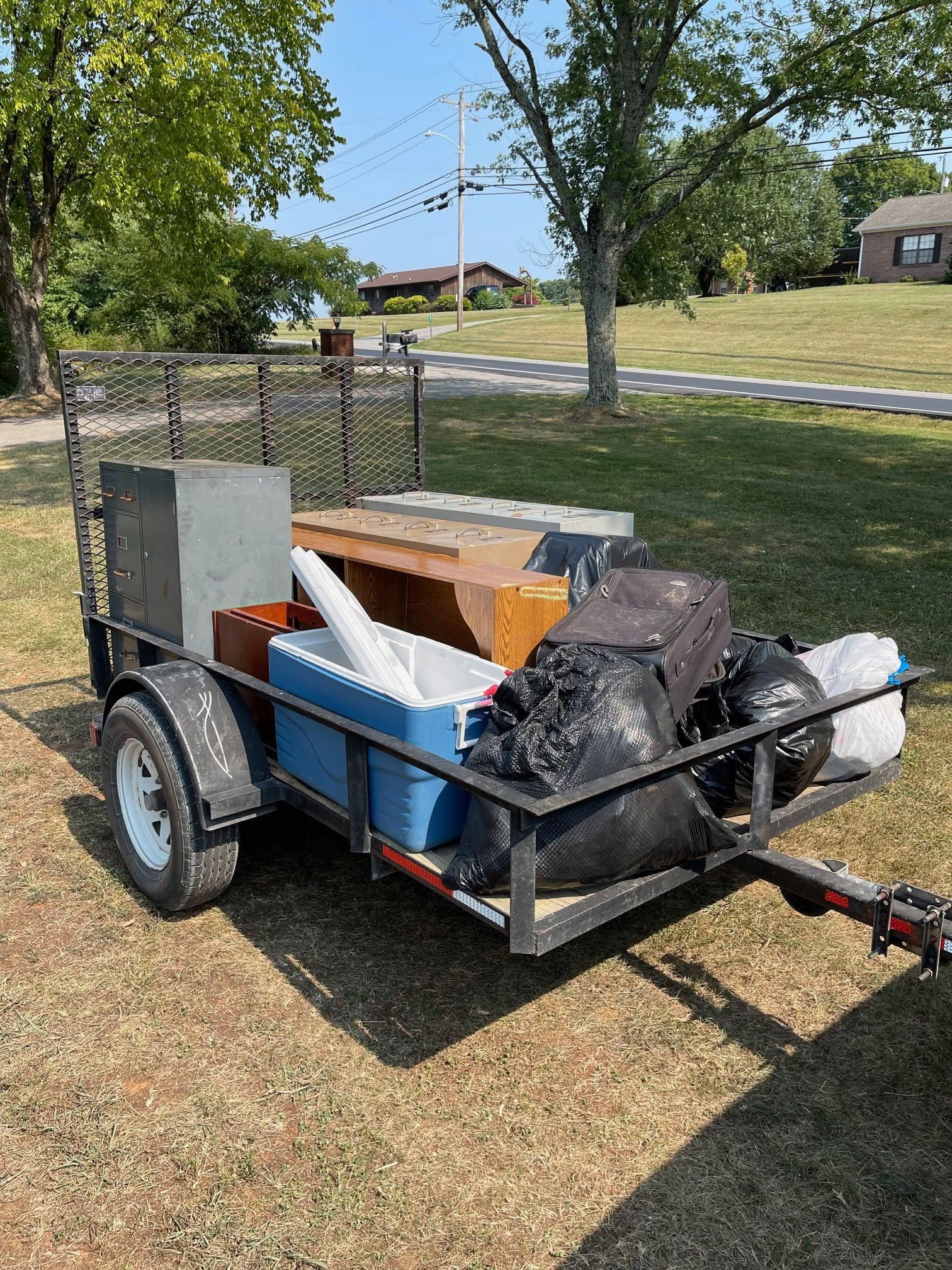
The most useful habit in any cleanout is to stop thinking of the pile as one pile. In Knoxville it is really four or five small piles, and each one has a different destination. City bulky waste collection handles furniture, appliances that qualify, tires with the rims removed, and old trash cans that are too large to fit in your empty cart. A hauler handles the rest, along with anything you would rather not carry to the curb yourself.
Bulky pickup has its own routine. You place a bulky alert by calling 311 before you set anything out, and then you put the items at the street curb where your trash cart normally sits. Expect the bulky truck to come within about two business days, since the regular trash truck usually does not collect these items. The program has a limit of five bulky items per week, and a setout bigger than that is not collected at all.
The city also lists what it will not take: pianos, exercise machines, items longer than six feet, and anything two sanitation workers cannot lift. If your garage holds a weight bench or a sectional the size of a small boat, that is a job for a crew, and it is better to know that before you drag it to the street.
Make three groups before you touch anything. One group is for city bulky pickup, one is for the hazardous waste facility, and one is for everything that needs a crew. Once the groups exist, the rest of the work follows from them.
2. Time Your Yard Debris Around the Brush Calendar
Brush and yard debris get their own rules in Knoxville, and they run on a calendar. City crews collect brush every two weeks, starting the first full week of March and running through the last full week of October. Collection follows a week of system, so crews begin on Monday and work through the week, and the day they reach your street can shift with how much brush the season has produced.
Placement matters as much as timing. Brush goes next to the street in an open area, separate from your trash and bulky items. Each setout should be no bigger than a single pile measuring six feet by six feet by six feet, and it should be out by 7 AM on Monday of your collection week. A pile that is over the size limit or mixed with other debris is the kind of setout that gets left behind.
That calendar has a practical consequence for East Tennessee homeowners. A limb that comes down in a December ice storm has nowhere to go through the city program until March. Limbs that sit on a lawn through the winter get in the way of the mower and attract pests. If the pile is large, or if it falls outside the season, a crew can load it on the truck and take it the same day.
Tip: Walk your property in the first week of March and again after any big storm. Stack limbs with the cut ends facing the same direction, and keep leaves in bags that are separate from the brush pile. A tidy pile is easier for any crew to lift, whether it is a city truck or a private one.
3. Take Household Hazardous Waste to the Right Place First
A full garage nearly always hides a few items that do not belong in a bulky pile or on a standard junk truck. Paint, pesticides, automotive fluids, aerosol cans, propane cylinders, and batteries are all in this group. Their ingredients can catch fire, react, or leach into the ground, so they need a facility built to handle them.
Knoxville residents have one. The household hazardous waste facility sits at 1033 Elm Street, and it accepts items such as automotive oil and fuel, rechargeable and lithium batteries, oil based paint, pesticides, herbicides, cleaners, aerosol cans, fluorescent tubes, propane cylinders, and many electronics, though not televisions. It is open to residents, and every visitor drives across the scale on the way in. Hours vary by day, with Saturday mornings available, so check the schedule before you load the car.
There are limits to know about. A resident visit can include up to twenty gallons of oil based paint and up to ten gallons of other liquids, within a total of about one hundred pounds of materials, and containers larger than five gallons are not accepted. Latex paint is the exception to the rule, because it is not treated as hazardous waste. It can be dried out or solidified and then placed in your regular household trash.
Some things are turned away entirely, including smoke detectors, oxygen tanks, medical waste, ammunition, and anything unidentifiable. Keep products in their original labeled containers whenever you can, since a label is what lets the staff know what they are handling.
Do this before the crew arrives. Pull the hazardous items out of the pile and set them in a box in the shade. A junk crew can take your furniture, your appliances, and your yard debris, but chemicals and cylinders are best delivered to the facility built for them.
4. Deal With Refrigerators, Grills, and Gas Equipment Early
Some of the items that look simplest in a cleanout carry the most hidden steps. Refrigerators, freezers, and air conditioners contain refrigerant, and the city does not collect them at the curb unless they have been professionally drained and tagged. Without that tag, they go to the Solid Waste Facility, which is a trip you would need to plan and a load you would need to lift.
Gas powered equipment works the same way. Mowers, weed eaters, heaters, and grills are not eligible for bulky pickup unless the fuel has been drained or the tanks have been removed. A mower with half a tank of gasoline is a fire concern in a hot truck bed, and a grill with a propane cylinder attached can be an accident waiting to happen.
The easier path is to hand these items to a crew that already handles them. A residential junk removal crew can take broken dishwashers, ovens, refrigerators, and other large appliances, and see that they are disposed of or recycled. Tell them what is in the pile when you book, and mention anything that still has fuel in it, so they can plan the load.
Warning: Never cut, puncture, or tip a refrigerator onto its side to make it easier to move. The cooling system holds refrigerant under pressure, and a damaged line can release it. Leave the appliance upright and untouched until the crew arrives, and keep the doors secured shut so nothing swings open during the move.
5. Keep Renovation Debris Separate From Household Items
Home projects leave a different kind of pile than a household cleanout does. Old doors and windows, a pulled toilet, cabinets, flooring, lumber, and drywall are all construction and renovation material, and the city bulky program does not take them. That debris is meant for the Solid Waste Facility, which means a trailer, a load of lifting, and a drive across town.
The mistake that slows things down most is mixing the two kinds of debris. A couch buried under a pile of tile and drywall scraps will not pass for a bulky item, and a crew has to spend part of the visit untangling the pile. Stack renovation debris in its own area, close to where the truck will park, and keep the household items in a different spot.
If your project is underway, you can also schedule the haul for the end of the work. Debris that sits in a driveway for two weeks collects rain, gets heavier, and gets picked through by neighborhood traffic. A crew can clear drywall, lumber, and flooring in one visit, and that leaves the site ready for the next trade on the schedule.
Nails and screws deserve a mention. Pull what you can from lumber, and sweep up loose fasteners from the driveway after the pile is gone, because they are the most common reason for a flat tire the following week.
6. Do a Final Pass for Personal Items and Data
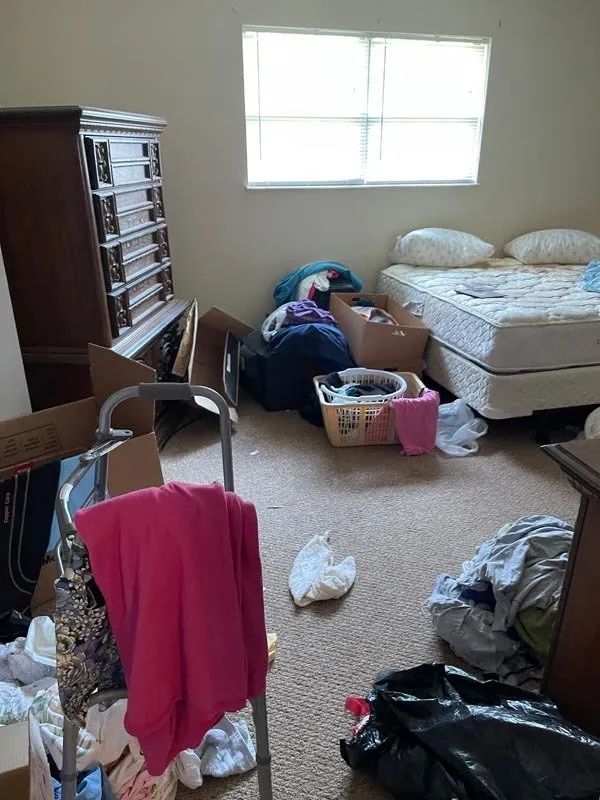
A cleanout moves fast once the truck is loaded, and that is the moment when things that matter leave with the junk. Before the crew arrives, take a few minutes to go through the pile and the rooms it came from. Open the drawers of every dresser and desk. Check the pockets of coats hanging on the pile. Look inside old speakers, toolboxes, and sewing kits, which are common places for keys, cash, jewelry, and keepsakes.
Papers need the same attention. Boxes that have been in the attic for years often hold tax records, account statements, medical bills, and photos. Decide what you want to keep, and shred what carries account numbers or personal details. A box does not need to be sorted completely in a single sitting. It only needs to be looked at before it is gone.
Old computers, phones, and tablets are the last item on this list. Back up anything you want to keep, sign out of your accounts, and use the device's reset option to erase it. Electronics that still work can often be passed on to a donation partner, and the ones that do not work can go to the recycling stream. Either path starts with a device that has been wiped clean.
7. Let the Weather and the Season Set Your Schedule
East Tennessee weather has more influence over a cleanout than most people expect. Summer heat turns an attic or an uninsulated garage into a place where nobody wants to spend an afternoon. Humid weather can leave cardboard soft and basement boxes damp. A hard rain can turn a pile on the driveway into a heavier, messier job than it was the day before.
Pick your day with the forecast in mind. A dry morning in the spring or fall is the easiest time to work, because you can leave doors open, move things outside without worry, and let the crew load at a steady pace. If you are clearing a basement or a crawl space, plan the cleanup for a stretch of dry days, since damp items are harder to carry and slower to load.
The seasons also set the stage for the other tips. Spring means the brush program has started and the yard has debris to clear. Fall brings leaves, and the brush calendar winds down at the end of October. Winter is the quiet stretch when attics and basements are easiest to reach and schedules open up. Book a time when you can be around to answer questions at the start of the visit, and ask the crew what you can do to help it go faster.
Putting the Seven Tips to Work
Sorting by destination, watching the brush calendar, taking hazardous items to the Elm Street facility, handling refrigerators and fuel early, separating renovation debris, checking for personal items, and planning around the weather will cover most of the surprises in a Knoxville cleanout. None of it takes special skill. Most of it is a matter of knowing which place takes which item, so you are not making the decision while a truck idles in your driveway.
The pieces that fall outside the city programs are the ones a crew handles best. Large furniture, appliances, mixed loads, and anything over the weekly limit are all part of a day's work, and a crew can clear them without you lifting a thing. That leaves you with the part only you can do, which is deciding what matters.
Frequently Asked Questions
How do I schedule a city bulky pickup in Knoxville?
Call 311 to place a bulky alert before setting anything out, then put items at the curb by your trash cart. The limit is five items per week, with pickup usually within two business days.
What does the Knoxville household hazardous waste facility accept?
The Elm Street facility takes automotive fluids, batteries, oil based paint, pesticides, cleaners, aerosols, fluorescent tubes, propane cylinders, and many electronics. It refuses latex paint, smoke detectors, oxygen tanks, and medical waste. Check hours first.
What should I do with old latex paint?
Latex paint is not hazardous waste. Dry it out with the lid off in a ventilated spot, or stir in cat litter until solid, then place it in regular household trash.
Can a junk removal crew take a refrigerator?
Yes. Crews take refrigerators, dishwashers, ovens, and other large appliances for disposal or recycling. Keep the appliance upright, empty the contents, and mention it when booking so the crew can plan.
When should I schedule a cleanout in East Tennessee?
A dry spring or fall day is easiest, since doors can stay open and outdoor staging is simple. Summer heat makes attics and garages hard to work in, while winter suits indoor spaces.
What is the best way to prepare before the crew arrives?
Sort items into groups for city pickup, hazardous waste, and the crew. Clear a path to the truck, check drawers for personal items, and keep renovation debris in its own stack.
Sending Every Item to the Right Place
Most Knoxville junk removal headaches come from not knowing where each item belongs. Sorting the pile by destination, watching the brush calendar, taking chemicals to the Elm Street facility, and handling refrigerators and fuel early cover most of the surprises. None of it takes special skill, only a little knowing ahead of time. The pieces that fall outside the city programs are the ones a crew handles best, which leaves you with the part only you can do: deciding what matters.
Just Call Scott
has spent 20
years clearing furniture, appliances, yard debris, and mixed loads across Knoxville, TN, and the crew handles the lifting, loading, and hauling so the whole pile leaves in one visit. Knowing which items go to the curb, which go to the hazardous waste facility, and which need a truck keeps each load moving smoothly. With the garage, basement, or yard cleared and every item sent where it belongs, the space is ready to be used again.